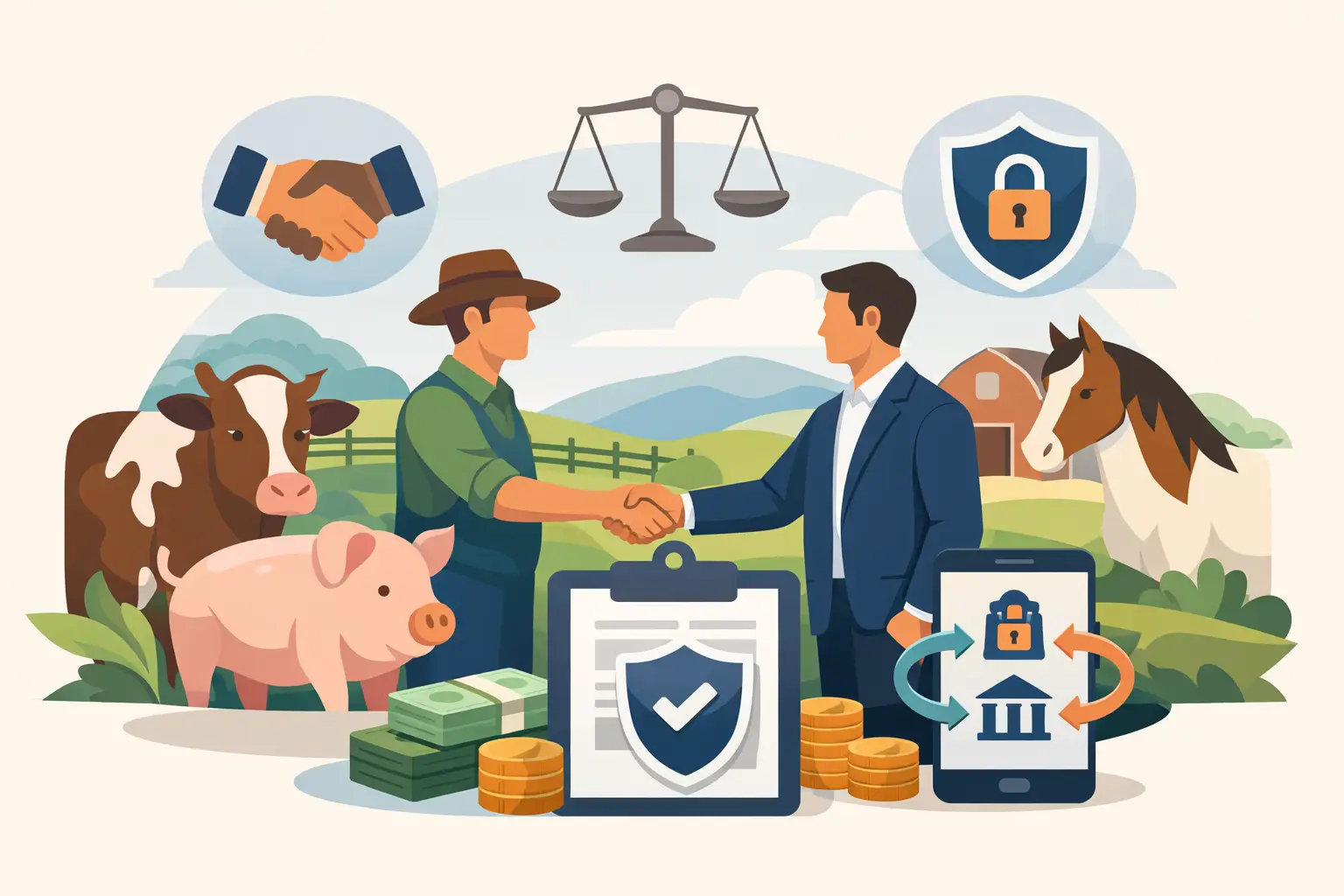
A cash deal at the gate can work when you know the seller, know the herd, and can load the animals the same day. Most online livestock transactions are not that simple. If you are buying cattle, goats, sheep, pigs, horses, or poultry from another state, a livestock escrow service can give you a cleaner, safer way to handle the money while the details get confirmed.
That matters because livestock deals move fast, but mistakes are expensive. A buyer may be sending thousands of dollars for breeding stock, replacement heifers, Boer goats, Dorper sheep, feeder pigs, or registered horses they have never seen in person. A seller may be holding valuable animals off the market while waiting on payment. Escrow gives both sides a middle ground that protects the transaction instead of relying on trust alone.
What a livestock escrow service actually does
A livestock escrow service holds the buyer’s funds with a neutral third party until agreed terms are met. Those terms usually cover the sale price, the type and number of animals, health documents, transport timing, and the point at which funds are released.
In a straightforward sale, the buyer sends payment to the escrow provider instead of directly to the seller. The seller knows the funds are secured, so the animals can be prepared for pickup or shipment. Once the agreed conditions are satisfied, the escrow provider releases the money to the seller.
That sounds simple, and in many cases it is. The real value is not just where the money sits. The value is that the sale terms get spelled out before the truck rolls. That alone prevents many disputes.
Why buyers ask for livestock escrow service
For buyers, the biggest concern is obvious: sending money for animals that do not match the listing, do not arrive as promised, or never ship at all. A livestock escrow service lowers that risk by making payment conditional.
This is especially useful when you are sourcing across state lines, buying from a farm you have not worked with before, or purchasing higher-value animals such as bred cows, registered bulls, dairy goats, breeding pairs, or specialty breeds. It also helps first-time buyers who may not know what normal payment terms look like in the livestock market.
Escrow does not replace due diligence. You still need to ask the right questions about age, breed, vaccination history, registration status, fertility, feeding program, and handling. You still need to confirm shipping arrangements and review any required certificates. What escrow does is give your questions financial backing. If key terms are part of the agreement, the money does not move until those terms are addressed.
Why sellers use escrow too
Good sellers benefit from escrow just as much as cautious buyers. Serious livestock sellers are often dealing with costly holding periods, transport scheduling, veterinary paperwork, and time-sensitive farm operations. They do not want to pull animals from availability only to have a buyer disappear or stall payment.
Escrow proves the buyer has the funds and intends to complete the deal. That matters when you are coordinating health inspections, brand paperwork, interstate certificates, or export steps. It can also reduce wasted time with shoppers who are not ready to commit.
For sellers trying to build trust online, offering escrow support can also make the listing stronger. Buyers are more likely to move forward when they see a clear payment process, especially on larger transactions involving cattle groups, breeding stock, or long-distance delivery.
When livestock escrow service makes the most sense
Not every animal sale needs escrow. If you are buying three feeder pigs from a nearby farm and paying at pickup after an in-person inspection, escrow may be unnecessary. But there are plenty of situations where it makes practical sense.
Long-distance sales are the clearest example. If the animals are being shipped from another region and you cannot inspect them yourself before payment, escrow adds structure. The same is true for multi-animal orders, higher-ticket breeding stock, imported or exported livestock, and transactions that involve transport delays or health-document requirements.
It is also a smart option when the deal includes specific conditions beyond basic delivery. That could mean a confirmed head count, sex, age range, breed representation, registration papers, pregnancy status, or veterinary clearances. The more detailed the transaction, the more useful escrow becomes.
What should be included in the escrow agreement
An escrow arrangement only works as well as the terms behind it. Vague agreements create the same problems as vague listings. Clear livestock transactions should identify exactly what is being sold and what must happen before funds are released.
At a minimum, the agreement should cover the species, breed, quantity, sale price, deposit terms if any, health paperwork, and delivery or pickup schedule. If the animals are registered, the transfer documents should be addressed. If transport is included, responsibility for hauling, timing, and condition at transfer should also be defined.
This is where many deals either become professional or stay risky. A seller saying, “These are nice goats and we will get them out next week,” is not the same as a documented agreement stating the buyer is purchasing ten Boer does with health certificates and transport scheduled for a specific date. Escrow works best when the sale terms are concrete.
Escrow is not a shortcut around common-sense buying
Some buyers hear the word escrow and assume that means every part of the transaction is guaranteed. That is not how livestock sales work. Escrow helps manage payment risk, but it does not automatically settle every possible disagreement about condition, performance, or buyer expectations.
Live animals are not manufactured products. Weight can vary. Temperament can vary. Travel stress can affect appearance on arrival. A healthy goat or calf may still look different after transport than it did in listing photos. That is why realistic terms matter.
If you are buying breeding stock, for example, clarify what is being promised and what is not. If you are buying commercial cattle, know whether the deal is based on exact weight, estimated weight, or head count. If you are sourcing poultry, rabbits, or other smaller livestock, ask how mortality risk during transport is addressed. Escrow supports a fair transaction, but it cannot fix assumptions that were never discussed.
How a strong marketplace uses livestock escrow service
On a serious livestock marketplace, escrow should not feel like a last-minute add-on. It should fit into a broader process that includes responsive communication, animal details, shipping coordination, and support around veterinary documentation.
That is where trust starts to become practical. Buyers do not just want animals listed at a good price. They want to know the seller can follow through. They want help understanding transport, timing, and paperwork. They want confidence that a deal involving Brahman cows, Angora goats, sheep, pigs, donkeys, or horses will be handled with basic professionalism.
Livestock Animals Exchange understands that concern because online buyers are not only comparing breeds and prices. They are also comparing risk. Escrow support, along with clear communication and shipping coordination, helps turn interest into action.
Red flags to watch before using escrow
Escrow only helps when the transaction itself is legitimate. If a seller refuses to identify the animals clearly, avoids providing recent photos or videos, changes terms after payment discussions start, or pushes for off-record money transfers, stop there.
The same goes for buyers who will not confirm their identity, keep shifting pickup plans, or expect animals to be held without secured funds. Good livestock deals are direct. The animals, paperwork, and money path should all make sense.
A reliable process should feel boring in the best way. Clear terms. Clear timing. Clear responsibility. That is how expensive misunderstandings get avoided.
The real value is confidence to buy better animals
A livestock escrow service is not just about fraud prevention. It gives buyers room to shop more confidently across a wider range of farms, breeds, and locations. That can mean better genetics, better availability, and better pricing than what is limited to a small local search radius.
For sellers, it can open the door to more qualified buyers who are ready to purchase but want protection in place before committing. That is good for turnover, good for reputation, and good for the long-term health of an online livestock business.
If you are investing real money in live animals, the payment process should match the value of the deal. A well-structured escrow arrangement keeps the transaction focused, reduces avoidable risk, and gives both sides a fair path from inquiry to delivery. When the terms are clear, buying livestock online becomes a lot more practical and a lot less uncertain.