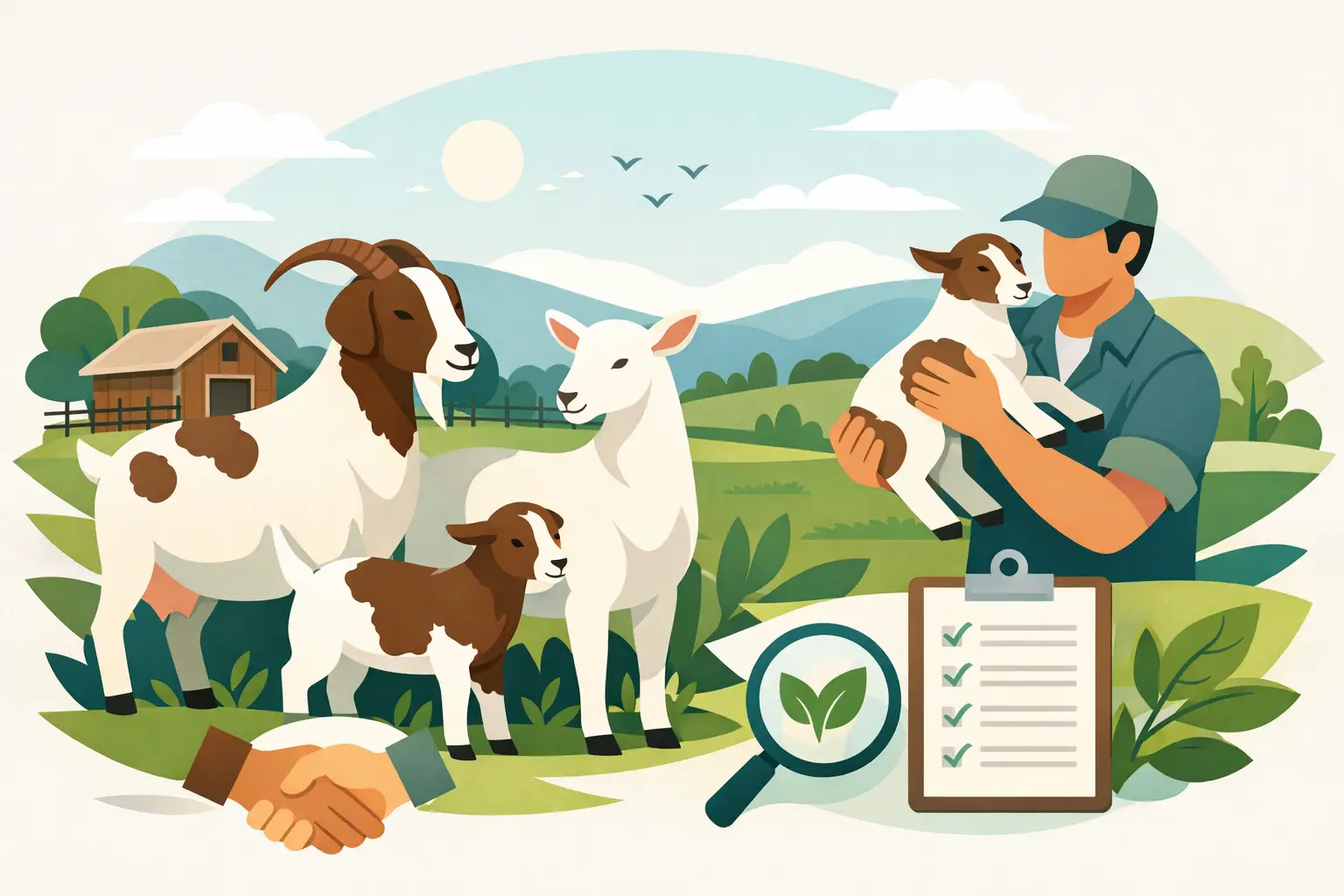
A good-looking goat in a photo tells you almost nothing about how that animal will perform in your herd. If you are searching for healthy breeding goats for sale, the real value is in the details behind the listing – body condition, sound feet, breeding history, vaccination records, and whether the seller can answer direct questions without hesitation. That is what separates a smart livestock purchase from an expensive problem.
Breeding goats are not impulse buys. Whether you are adding does for milk, meat, fiber, or herd expansion, the animals you bring in now will affect kidding rates, growth, milk production, and long-term herd health. Buyers who take a little more time upfront usually save money, avoid weak genetics, and build a more productive operation.
What healthy breeding goats for sale should actually include
A serious listing should give you more than breed and price. Healthy breeding stock should be represented with enough information to help you judge quality before you ever arrange pickup or shipping. That includes age, sex, breed, current health status, reproductive status, and recent photos that show the animal standing naturally.
You also want to know whether the goat has been exposed to a buck, has kidded before, is registered if that matters to your program, and whether there are any known health issues in the herd. A seller offering quality stock should not act like these are difficult questions. Breeding buyers are not just buying an animal – they are buying future production.
Condition matters too, but there is a balance. A breeding doe should not look thin and stressed, and she should not be overfed to look impressive in photos. Strong topline, bright eyes, good rumen fill, sound legs, and a healthy coat usually tell you more than glossy marketing language.
How to judge breeding quality before you buy
The best buyers stay practical. Not every farm has elite show stock, and not every operation needs it. What matters is whether the goat fits your goals and whether the health and reproductive basics are solid.
Start with structure. Feet and legs need to be sound because breeding animals that cannot move comfortably will not hold up well over time. Does should look feminine but sturdy, with adequate width and capacity. Bucks should look masculine, strong, and active without appearing coarse or poorly put together.
Then look at breeding usefulness. If you are buying proven does, kidding history is valuable. Ask how many kids they have had, whether they mother well, and whether there have been kidding issues. If you are buying young stock, the question becomes more about genetics, growth, and the quality of the sire and dam.
Health records should back up the sale. Vaccination schedule, deworming approach, disease testing when relevant, and any veterinary support all help reduce uncertainty. No livestock purchase is risk-free, but a transparent seller lowers that risk considerably.
Questions worth asking any seller
Ask whether the goats are on grain, hay, browse, or pasture and what mineral program they are receiving. Sudden feed changes can set goats back fast after transport. Ask whether the herd has had recent illness, whether any animals have been treated for chronic problems, and whether the goats are used to handling.
If you are buying a buck, ask about fertility and breeding performance if he is of age. If you are buying does, ask whether they are open, exposed, bred, or recently freshened. Those details affect price and management right away.
Choosing the right breed for your farm
Not every healthy goat is the right breeding goat for your operation. Buyers often get hung up on popular breeds when they should be thinking about climate, feed availability, fencing, market demand, and the purpose of the herd.
Boer goats are a common choice for meat production and commercial crossbreeding because they grow well and are widely recognized. Kiko goats appeal to buyers who want hardy, efficient animals in lower-input systems. Nubians and Alpines are often selected for milk programs, while Angora goats fit fiber-focused operations. Some farms want dual-purpose usefulness, and some want a breed that performs well on rougher pasture.
That is where experience matters. A breed that performs well on one farm may not be the best fit for another. High-producing dairy animals can need more management than a beginner expects. Heavier-framed meat goats may need more feed support than a browse-based setup provides. Good sellers help buyers match the animal to the farm instead of pushing whatever is available.
Why price alone is a poor way to shop
Cheap goats can become expensive very quickly. A low upfront price may reflect poor health, weak structure, unproven breeding ability, bad temperament, or no documentation. That does not mean every affordable goat is a bad buy, but it does mean price only makes sense when you compare it with the full picture.
A higher-priced doe with sound genetics, good mothering history, and verified health work can be a better value than two bargain animals that never breed back properly. The same goes for bucks. A strong herd sire can improve an entire kid crop. A weak one can waste a season.
Commercial buyers, small farmers, and homesteaders all benefit from thinking in terms of return, not just ticket price. Healthy, productive breeding stock supports kidding rates, kid survival, and saleable offspring. That is where the real value shows up.
Buying locally versus shipped breeding goats
Many buyers start by searching close to home, and that makes sense. Local purchases can simplify inspection, reduce transport stress, and make it easier to build a relationship with the seller. But local availability is not always enough, especially if you need a specific breed, bloodline, or quantity.
That is where wider marketplace access becomes useful. Shipping can open up better inventory and more competitive pricing, but only if the process is handled correctly. Transport timing, health paperwork, weather conditions, and arrival planning all matter. A breeding animal that travels well still needs proper rest, hydration, and a clean transition once it reaches your farm.
For some buyers, the best option is local pickup. For others, shipped stock is the only practical path to getting the quality they want. It depends on your location, your timeline, and how specific your breeding goals are. What matters most is working with a seller who can coordinate the details clearly and provide support before the animals move.
Trust signals that matter when buying breeding stock
When buyers are comparing healthy breeding goats for sale online, trust should be built on proof, not promises. Clear communication is one of the strongest signals. If questions are answered directly and consistently, that is a good sign. If answers stay vague, change over time, or avoid records, pay attention.
Photos and videos help, but they are only part of the picture. Veterinary references, health documents, and organized sale information matter more. For higher-value purchases, buyers may also want added reassurance through structured payment protection or escrow support. That can be especially useful for shipped livestock or larger multi-animal orders.
A dependable livestock marketplace should make the process easier, not more confusing. At Livestock Animals Exchange, the goal is straightforward – give buyers access to available stock, practical guidance, and a buying process backed by communication, transport help, and confidence-building support.
Preparing your farm before the goats arrive
Even the best breeding animals can struggle in a poor setup. Before purchase, make sure fencing is secure, shelter is dry, and quarantine space is available. New arrivals should not go straight into the main herd without a plan. That is a basic protection step for both the new goats and the animals you already own.
Feed should be ready before arrival, and ideally it should transition gradually from what the goats were receiving before shipment or pickup. Clean water, quality hay, minerals formulated for goats, and low-stress handling all help breeding animals settle in faster.
If you are bringing in a buck, think beyond housing. Bucks need secure separation when required, and they can be harder on fencing than many first-time buyers expect. If you are bringing in bred does, your timing matters too. A doe close to kidding needs calm handling and close observation, not a chaotic move with no preparation.
A better way to shop for breeding goats
The strongest buying decisions usually come from slowing down just enough to ask better questions. Look past flashy listings. Focus on health, fertility, structure, breed fit, and seller transparency. A goat that fits your program, arrives in sound condition, and performs season after season is worth far more than one that only looked good on sale day.
If you are shopping for breeding stock, think about the herd you want two years from now, not just the goat you want this week. That approach tends to lead to better animals, better outcomes, and fewer regrets once the trailer gate closes.