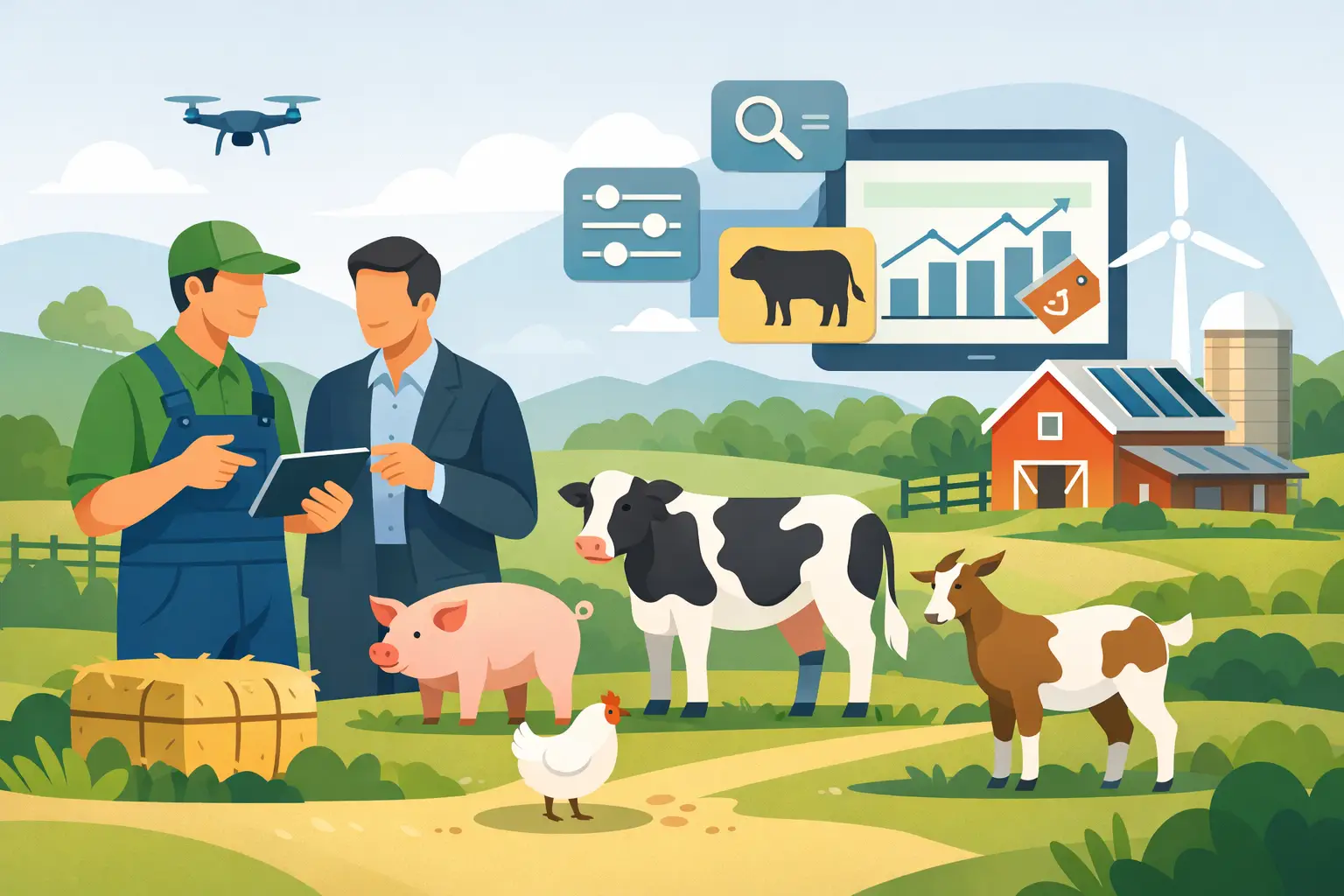
A cheap animal can turn expensive fast if it shows up stressed, underweight, bred at the wrong time, or simply not suited to your setup. That is why a solid livestock buying guide matters. Whether you are buying one Boer goat for a small property or building out a larger group of cattle, sheep, pigs, or poultry, the right purchase starts with clear goals, verified animal quality, and a seller that can actually support the sale.
Most buying mistakes happen before the first call. Buyers start by searching for a breed name or typing in “livestock farms near me,” then they focus too heavily on price and too little on fit. The better approach is to know what job the animal needs to do on your farm. Beef production, dairy use, breeding, fiber, meat, brush control, pasture improvement, and family homestead use all point to different species, breeds, ages, and temperaments.
How to use this livestock buying guide
Start with purpose, not impulse. A good-looking listing is not enough. If you need breeding stock, your standards should be different from someone buying feeder animals or pasture companions. A registered Brahman cow, a commercial Dorper ewe, and a pair of Angora goats can all be good buys, but only if they fit your land, feed plan, climate, fencing, and budget.
Land size matters, but management matters more. Some buyers assume more acreage automatically means they can buy more animals. In reality, forage quality, water access, shelter, rotational grazing, and labor usually limit success before acreage does. A small operator with sound fencing and a feed plan often gets better results than a larger buyer who purchases too many head too quickly.
Your timeline also changes what makes sense. If you need animals ready to breed this season, age, weight, and reproductive status become immediate priorities. If you are building a herd over time, it may be smarter to buy younger stock at a more favorable price and grow them out under your own management.
What to check before buying livestock
Animal health should be the first filter. Ask for current photos and recent video when possible, especially for higher-value purchases or shipped animals. You want to see body condition, movement, eyes, coat or fleece quality, feet and legs, and overall alertness. A healthy animal does not need to be perfect, but it should show soundness and consistency with its age and use.
Vaccination history, deworming schedule, and any testing relevant to the species should be part of the conversation. Experienced buyers usually ask direct questions because vague answers often lead to expensive surprises. If a seller cannot clearly explain feeding, health history, and how long they have owned the animals, that should slow the deal down.
Breed claims also deserve a closer look. Some buyers pay premium prices for names alone. Breed quality matters, but so does proof. If you are buying breeding animals, ask whether they are registered, percentage, commercial, exposed, open, bred, or sold with papers. Those details affect value in a real way. For production animals, performance and soundness may matter more than paperwork, depending on your operation.
Temperament should not be overlooked, especially for smaller farms, family properties, and first-time buyers. A nervous heifer, aggressive ram, or hard-to-handle boar can create daily problems that outweigh any discount on the sale price. Good livestock should be workable for the environment they are entering.
Breed choice and buying strategy
There is no single best breed, only the best match for your goals. Buyers looking at cattle may lean toward Brahman for heat tolerance and adaptability, but those strengths are not the full story for every farm. Goat buyers comparing Boer goats and Angora goats are not choosing between better and worse animals. They are choosing between meat value and fiber value, along with different management demands.
The same applies across species. Dorper sheep appeal to many meat producers because they are hardy and practical. Pigs can be a fast route to meat production, but feed costs and housing setup need to be realistic. Chickens and rabbits often look easy on paper, yet predator control, housing, and turnover can make them more hands-on than expected. Horses, donkeys, and camels require an even more careful fit between buyer expectations and actual care requirements.
A practical livestock buying guide always comes back to use case. If your goal is resale, breeding, or long-term herd improvement, quality genetics deserve more weight. If your goal is utility and affordability, you may have more flexibility. The key is not overpaying for features you will not use or underbuying when quality really matters.
Price is important, but value matters more
Every buyer wants a fair price. That is reasonable. But the lowest listing is not always the best buy once transport, health risk, adaptation problems, and replacement cost are considered. A healthy, accurately represented animal from a dependable source often saves money over time.
This is especially true when buying multiple species or stocking a farm in stages. Coordinating cattle, goats, sheep, pigs, poultry, and other livestock from scattered sellers can create unnecessary stress and hidden expense. Buyers usually benefit from working with a marketplace or supplier that offers broad inventory, clear communication, and support around transport and documentation.
That support becomes even more important with long-distance purchases. Shipping logistics, timing, weather, interstate health paperwork, and unloading preparation all affect animal condition on arrival. A seller who understands those moving parts adds real value, even if the upfront price is not the absolute lowest you found online.
A livestock buying guide for local and shipped purchases
Local buying gives you the advantage of seeing animals in person, checking facilities, and sometimes loading the same day. It can be the fastest path when nearby inventory matches your needs. Still, local does not automatically mean better. Some buyers limit themselves too early and miss stronger quality, better breed selection, or more competitive pricing available through wider search.
Shipped purchases open up more options, especially for hard-to-find breeds or buyers trying to source multiple animals efficiently. The trade-off is that trust has to be stronger. That means asking better questions, requesting better documentation, and working with sellers that provide reassurance beyond simple claims.
This is where buyer protections matter. Escrow support, veterinary department references, transport coordination, and consistent communication can reduce risk. Livestock Animals Exchange serves buyers who want access to multiple species, practical pricing, and guidance that helps the transaction feel more secure from first inquiry to delivery.
Questions serious buyers should ask
Before committing funds, ask how the animals are currently fed and managed. Sudden diet changes can stress livestock after arrival, so you need to know what transition plan will be required. Ask about age, approximate weight, breeding status, and whether the animals are halter-broke, pasture-raised, barn-kept, or mixed in a larger herd.
For breeding stock, ask about kidding, lambing, calving, farrowing, or laying history where relevant. For males, ask about fertility history if available. For all species, ask whether any defects, injuries, or chronic issues are known. Straight answers are part of a trustworthy sale.
You should also ask what happens after the purchase agreement. How soon can the animals ship or be picked up? What paperwork will be provided? What deposit is required? Who coordinates transportation? These details may sound administrative, but they often determine whether a transaction goes smoothly or turns into a delay.
Preparing your farm before the animals arrive
Buying well is only half the job. Your fencing, shelter, water system, feed storage, and quarantine plan need to be ready before arrival day. Too many buyers spend weeks shopping and only a few hours preparing. That backward order causes stress for both the animals and the owner.
Quarantine is especially useful when adding new animals to an existing herd or flock. Even healthy-looking livestock should be observed before full integration. This is a practical step, not an overreaction. It gives you time to monitor appetite, manure, movement, and behavior while reducing the chance of introducing problems to your current stock.
Feed planning should be just as specific. If the animals have been on hay, grain, browse, pasture, pellets, or a mixed ration, transition gradually. The goal is to keep them eating, drinking, and settling in with as little disruption as possible.
The best buyers are not the ones who move fastest. They are the ones who know what they need, verify what they are buying, and work with sellers who can back up the sale. If you treat livestock like a long-term farm decision instead of a quick online purchase, you give yourself a much better chance of bringing home animals that earn their keep.