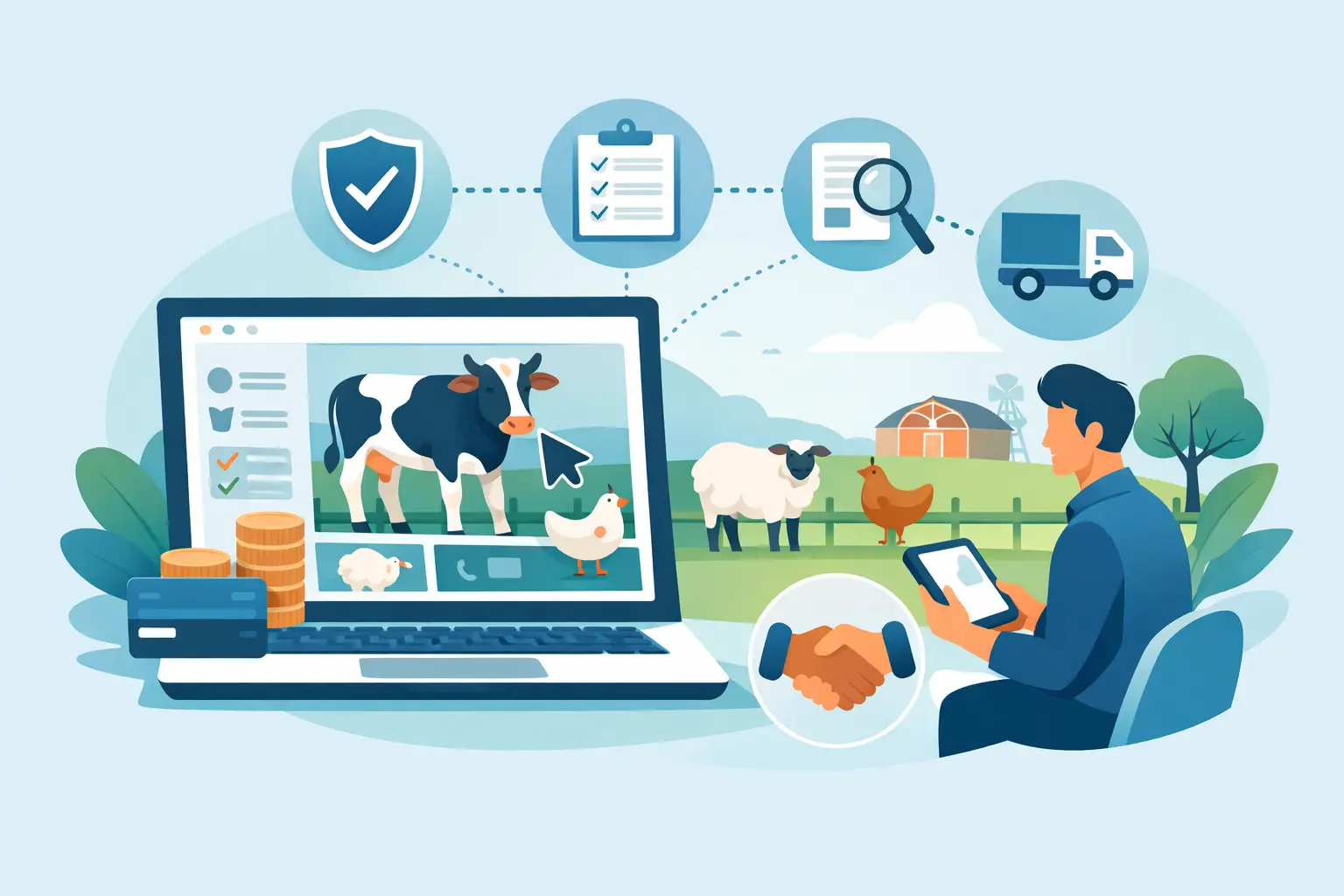
Buying a bred cow, a set of Boer goats, or a few feeder pigs online can save you time and open up far better options than whatever happens to be listed locally that week. But if you want to know how to buy livestock online without costly mistakes, the real job is not just finding animals. It is verifying the seller, confirming animal quality, and making sure transport, paperwork, and expectations all line up before money changes hands.
Online livestock buying works best when you treat it like a business decision, not a quick classified purchase. Good listings can help you compare breeds, prices, ages, and locations faster than driving from farm to farm. At the same time, a low price means very little if the animals arrive stressed, misrepresented, or unfit for your goals.
How to buy livestock online the smart way
The first step is getting clear on what you actually need. That sounds obvious, but many buyers start by shopping the animal before they define the purpose. A family homestead looking for easy-keeping dairy goats should not shop the same way as a rancher buying replacement heifers. A small acreage owner wanting hair sheep for pasture management has different priorities than someone building a registered breeding program.
Start with use first – breeding, meat production, milk, fiber, pasture control, resale, or show quality. Then narrow by breed, age, sex, weight range, and whether you want registered stock, commercial stock, or proven breeders. If you skip this step, it becomes easy to overpay for genetics you do not need or buy animals that do not fit your setup.
That matters across species. A buyer searching for Brahman cows may care about heat tolerance and maternal traits. Someone looking at Angora goats will be thinking about fiber quality and management needs. Dorper sheep, Boer goats, pigs, horses, chickens, rabbits, donkeys, and camels all come with different housing, feed, fencing, and health requirements. Online marketplaces make access easier, but they do not remove the need for fit.
What to check before you contact a seller
Once you find a listing that looks promising, slow down and review the details like a serious buyer. The strongest listings usually answer practical questions up front. You should be able to see the breed, age, sex, count, location, and a realistic description of the animal’s condition and purpose.
Photos matter, but not just because they look good. You want clear, recent images that show the actual animals from multiple angles. Video is even better for evaluating movement, body condition, soundness, and general behavior. If the listing only has vague photos, old images, or stock-style pictures, ask for updated media before going any further.
Health details should be specific. Ask whether the animals are vaccinated, dewormed, disease tested where relevant, and under routine herd health management. For breeding stock, ask about fertility history, kidding or calving records, lambing history, weaning performance, and whether the animals have any known defects. For poultry and rabbits, ask about mortality history, age, and how they have been housed.
If registration papers, pedigree information, or performance data matter to you, request them early. A seller should be able to explain what records are available and what is not. Commercial livestock can still be a strong buy, but the price should reflect the absence of documented genetics.
Trust matters more than a low price
One of the biggest mistakes buyers make when learning how to buy livestock online is chasing the cheapest listing first. In livestock, a bargain can get expensive fast. Poor health, weak structure, inaccurate breeding claims, or shipping surprises can wipe out whatever you thought you saved.
A reputable seller should be comfortable answering direct questions. Ask how long they have been raising that species or breed, whether they can provide veterinary references, and whether they offer any buyer protections such as escrow support. If they avoid normal questions, pressure you to rush payment, or give inconsistent answers, that is a warning sign.
Good sellers also understand that buyers need reassurance. They are usually willing to discuss handling practices, feed program, herd management, and transport expectations. If you are buying from a farm-branded marketplace such as Livestock Animals Exchange, the value is not just inventory volume. It is the added structure around communication, available species, trust signals, and shipping coordination that helps reduce friction for buyers.
Ask the questions that protect your investment
Before you commit, get clear answers on the points that affect performance after arrival. Ask whether the animal is bred, exposed, open, weaned, halter broke, bottle raised, pasture raised, or accustomed to certain feeds. Small details can affect how easily the animal transitions to your farm.
For cattle, sheep, and goats, ask about feet, udders, eyes, teeth, body condition, and parasite pressure. For pigs, ask about growth rate, housing system, and whether they are intact or processed. For horses and donkeys, temperament and handling history are essential. For poultry, verify breed accuracy, laying stage if relevant, and shipping method. For rabbits, ask about age, breeding status, and line health history.
This is also the time to ask why the animal is being sold. There are plenty of normal reasons – herd reduction, seasonal inventory turnover, breed rotation, or moving feeder stock. The answer itself matters less than whether it makes sense.
Understand transport before you buy
Shipping is where many online livestock deals either work well or go sideways. Never assume transport is simple just because the animals are available. Ask who arranges it, how far the animals will travel, what kind of trailer or crate setup is used, what health papers are required, and who is responsible if timing changes.
Interstate movement often requires certificates of veterinary inspection, and some species or states have additional rules. International shipping is more complex and may involve quarantine, import permits, and extra veterinary documentation. Buyers should confirm requirements on both ends before final payment.
Transport stress is real, especially for young, newly weaned, or breeding animals. Sometimes the cheapest shipping option is not the best one. If you are buying high-value breeding stock, paying more for careful handling and direct routing can be the smarter move.
Payment should be clear and documented
If a seller asks for payment in a way that gives you no protection and no paperwork, stop there. You want a clear invoice or written agreement showing what is being purchased, how many head, what breed or class, the total price, deposit terms if any, pickup or delivery arrangements, and what documentation comes with the sale.
Escrow can make sense for larger transactions or when buying from a distance. It adds one more layer of confidence for both sides. Even when escrow is not used, every payment should match a written record. That is basic business, and serious livestock sellers understand it.
How to compare listings without getting overwhelmed
The online market can move fast, especially for popular breeds and well-priced groups. The best way to stay sharp is to compare listings by value, not just sticker price. A slightly higher-priced set of healthy, well-described animals with records, responsive communication, and shipping support is often the better buy.
Look at the whole package – breed quality, condition, age, sex, production purpose, seller credibility, and logistics. Two listings for Boer goats may look similar at first glance, but one may include stronger genetics, better herd health practices, and easier delivery. That difference matters.
It also helps to think in terms of long-term cost. Healthy, properly matched animals usually settle in better, perform sooner, and create fewer setbacks. Cheap animals with hidden issues can cost more in treatment, labor, and lost productivity.
A practical way to buy with confidence
If you want a simple approach, narrow your search to sellers or marketplaces that offer broad species availability, realistic listing details, customer support, and trust-building options such as veterinary references or escrow support. Then ask direct questions, review the animal records, and confirm shipping before paying.
That process works whether you are buying one family milk goat, a few Dorper sheep, a trailer load of pigs, or registered breeding cattle. It also helps first-time buyers avoid the two biggest traps in online livestock buying – assuming every listing is equal and moving too fast because the price looks good.
Knowing how to buy livestock online is really about reducing uncertainty at every step. The right animals are out there, and online access makes them easier to find than ever. Buy with clear standards, keep the paperwork tight, and choose sellers who make it easy to verify what you are getting. That is how an online purchase turns into livestock that actually adds value to your farm.